
Zane Bennett Contemporary Art is proud to announce the acquisition of In the Heat of Winter (1994), a landmark screen print by Miriam Schapiro, a pioneering figure in the Feminist Art movement and a founding member of the Pattern and Decoration movement. In the Heat of Winter is the largest—and arguably the most ambitious—print produced in Schapiro's career. It occupies a distinctive place in her oeuvre and within the broader field of postwar abstraction.
In 1971, Miriam Schapiro and Judy Chicago worked with a group of students in the Feminist Art Program at the California Institute of the Arts (CalArts) to transform a dilapidated house in Los Angeles into Womanhouse, the first openly feminist art installation. The project proved highly influential within the history of the Feminist Art movement for its insistence on women's lived experience as a foundation for artistic practice.
Schapiro frequently incorporated textiles into her work and is regarded as a central figure in the Pattern and Decoration movement, which emerged in the 1970s as a reaction to the austerity and formal restraint of Minimalism. Because textile production has historically been categorized as craft and closely associated with women's labor, Schapiro sought to dismantle the hierarchy that positioned such materials as inherently inferior to fine art. She did so by integrating fabric, pattern, and ornament into her paintings and prints in ways that foregrounded their abstract, formal, and compositional properties. Her use of lace, doilies, handkerchiefs, and floral fabrics functioned as a deliberate celebration and reclamation of traditionally feminine and domestic forms of handiwork. Schapiro coined the term femmage to describe her collage-based practice that reflected her feminist perspective.
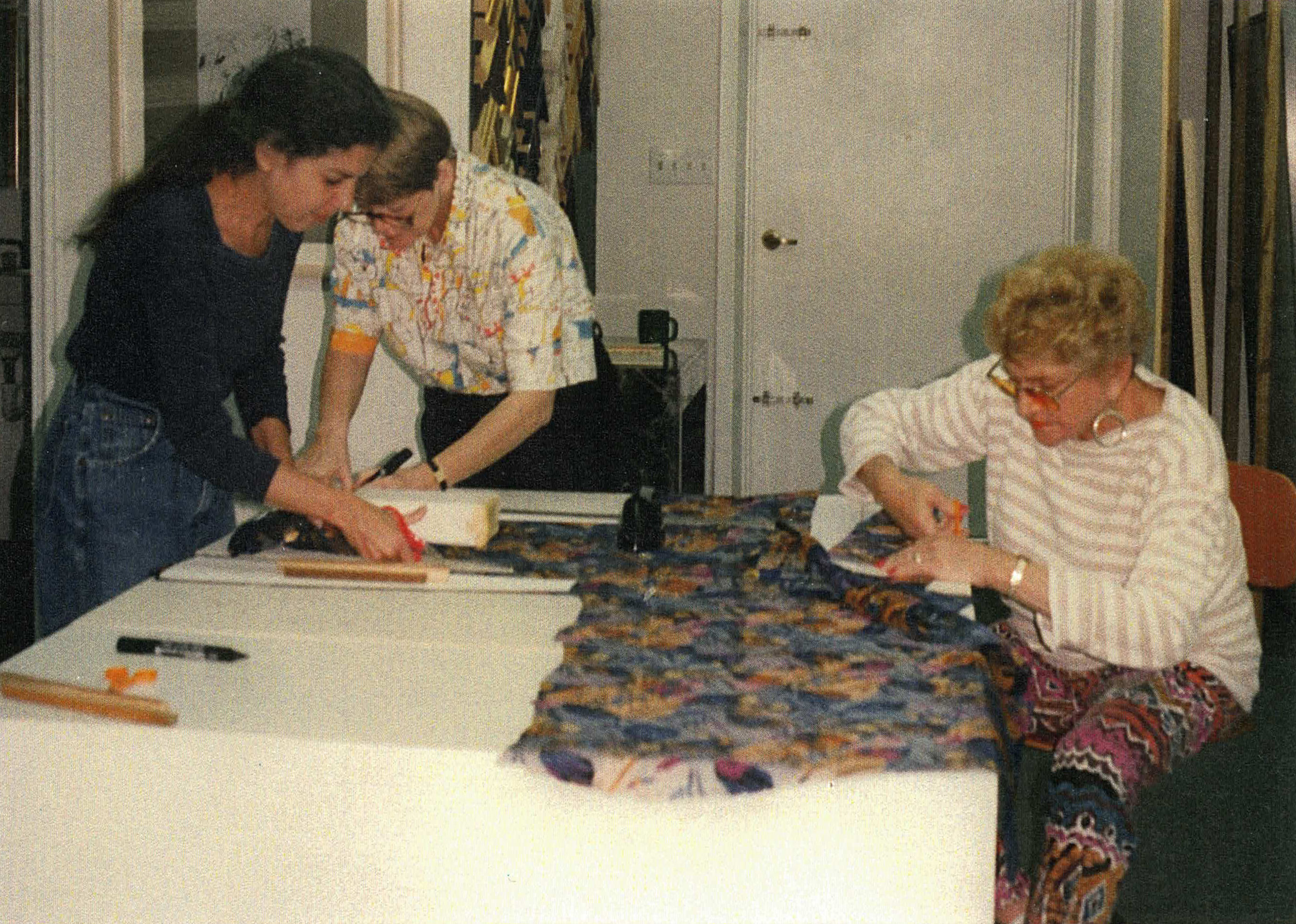
Volunteers cutting fabric for the edition of In the Heat of Winter by Miriam Schapiro. Photo courtesy of Linda Berghoff
Within this context, In the Heat of Winter stands as a culminating statement of Schapiro's late print practice and her sustained engagement with the fan as a central motif in her oeuvre. The fan recurs throughout Schapiro's work as part of a "lexicon of forms" that she identified in the 1970s—objects historically associated with femininity that she sought to reclaim by heroizing them in her work. Produced as a large-scale screenprint in the final decade of her career, In the Heat of Winter represents the most ambitious realization of the fan motif in print. While the fan carries long-standing associations with adornment, Schapiro aligned the form with broader historical sources, drawing on Southwestern, Greek, and Egyptian design traditions wherein symmetry and ornament function as carriers of symbolic meaning. These references coalesce in the screenprinted and collaged bands of an arc that spans more than five feet: the fan operates visually as a domestic object ornamented with evenly-spaced architectural features and bold ceremonial motifs.
This work exemplifies Schapiro's use of pattern, texture, and color to construct a bold and assertive abstract composition—one that transforms historically feminine visual languages into a work that is layered, monumental, and conceptually complex. In the Heat of Winter is a forty-color screenprint that took six months to complete, illustrating the technical ambition of its production. The print incorporates extremely thin pieces of fabric applied directly below areas of printed color, creating an optical effect in which the hue of the fabric subtly interacts with and alters the ink beneath. Each fabric swatch was handpicked by Schapiro from her personal collection and brought to Berghoff-Cowden Editions in Florida where the work was produced. Although part of an edition of forty, the selection of fabric pieces cut and adhered to each panel makes each print distinct.
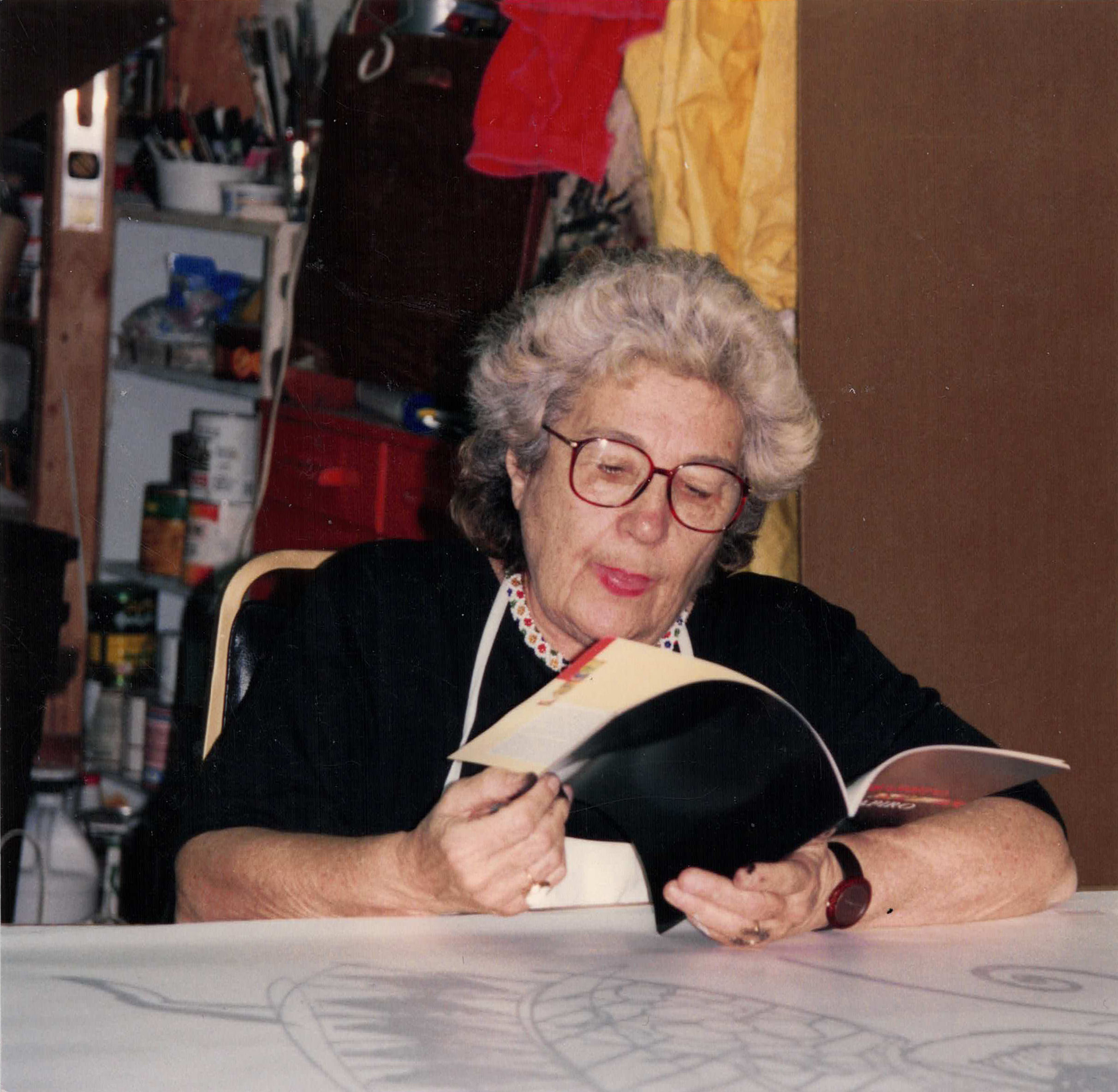
Miriam Schapiro reads at Berghoff-Cowden Editions. Photo courtesy of Linda Berghoff
The title itself carries an additional layer of experiential specificity. According to one of the printers involved in the project, In the Heat of Winter was produced during one of the hottest winters in memory, lending the work a quietly autobiographical dimension. By embedding textile-derived patterns and fabric-like imagery within this monumental structure, Schapiro collapses distinctions between fine art and craft, ancient and modern, abstraction and lived experience. In the Heat of Winter asserts the fan as a vehicle for abstraction itself, which stands as a testament to Schapiro's lifelong engagement with the aesthetic, historical, and conceptual weight of forms rooted in women's labor and cultural memory.
In the Heat of Winter is illustrated in Marks Made: Prints by American Women Artists from the 1960s to the Present, published by the Museum of Fine Arts, St. Petersburg, Florida. Impressions of the work are held in the collections of the Leepa-Rattner Museum of Art in St. Petersburg, Florida, the Hecksher Museum of Art in Huntington, New York; and the Tucson Museum of Art in Arizona. For information about this impression of In the Heat of Winter referenced here, or to inquire about other postwar abstraction prints available through the gallery, please email info@zanebennettgallery.com.
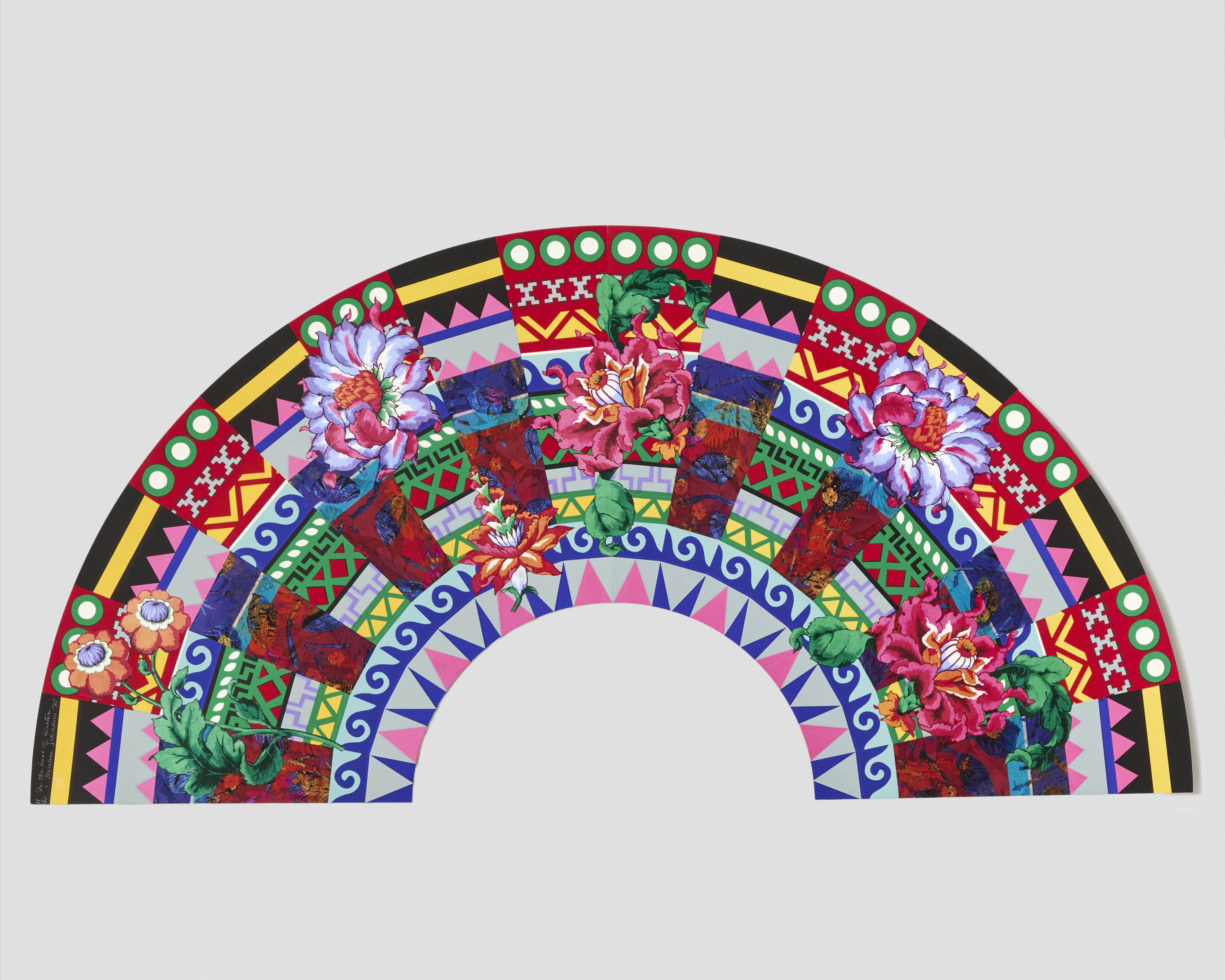
MIRIAM SCHAPIRO | In the Heat of Winter, 1994. Screenprint, 33 x 62 in (83.8 x 157.5 cm)

MIRIAM SCHAPIRO | (DETAIL) In the Heat of Winter, 1994. Screenprint, 33 x 62 in (83.8 x 157.5 cm)
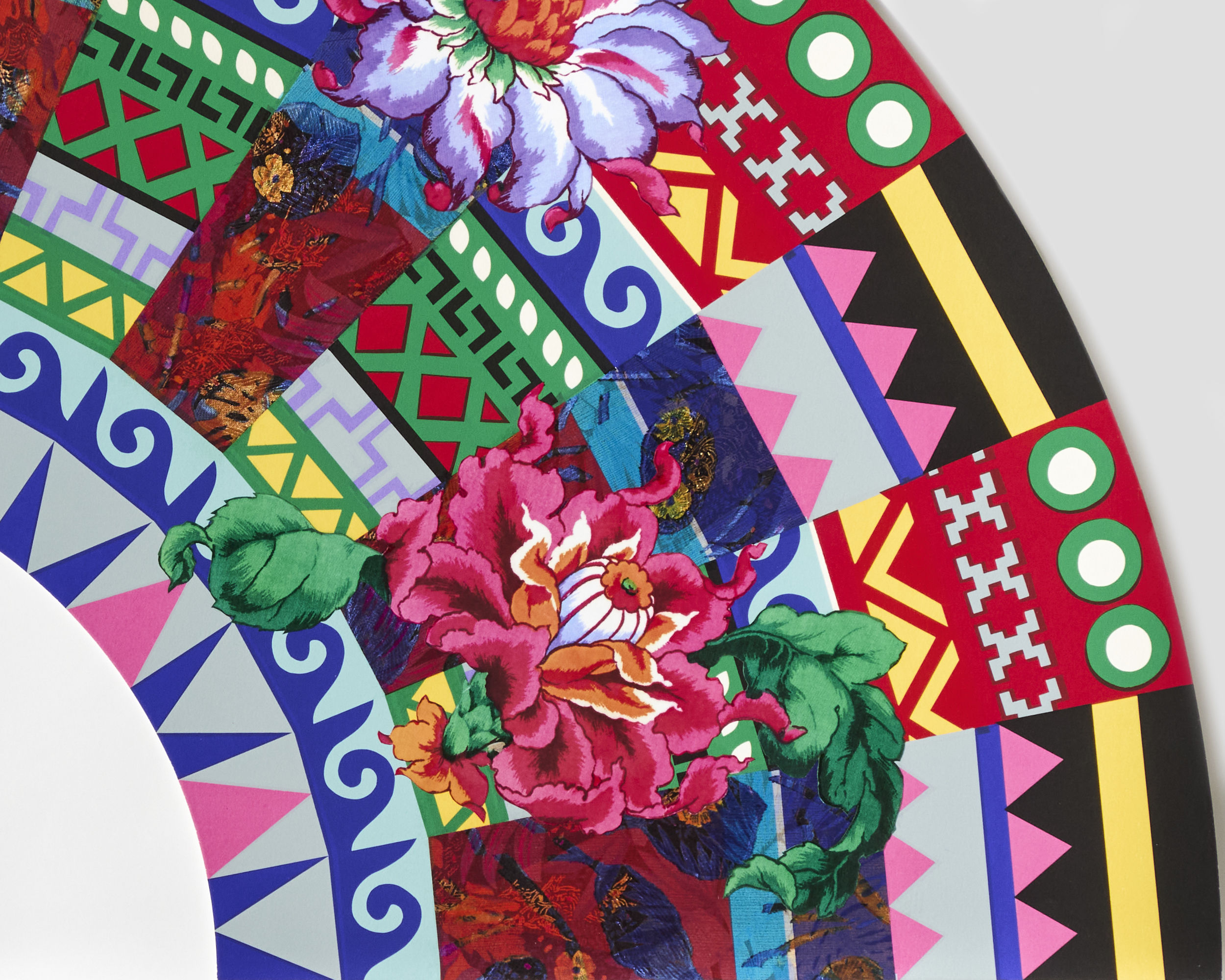
MIRIAM SCHAPIRO | (DETAIL) In the Heat of Winter, 1994. Screenprint, 33 x 62 in (83.8 x 157.5 cm)
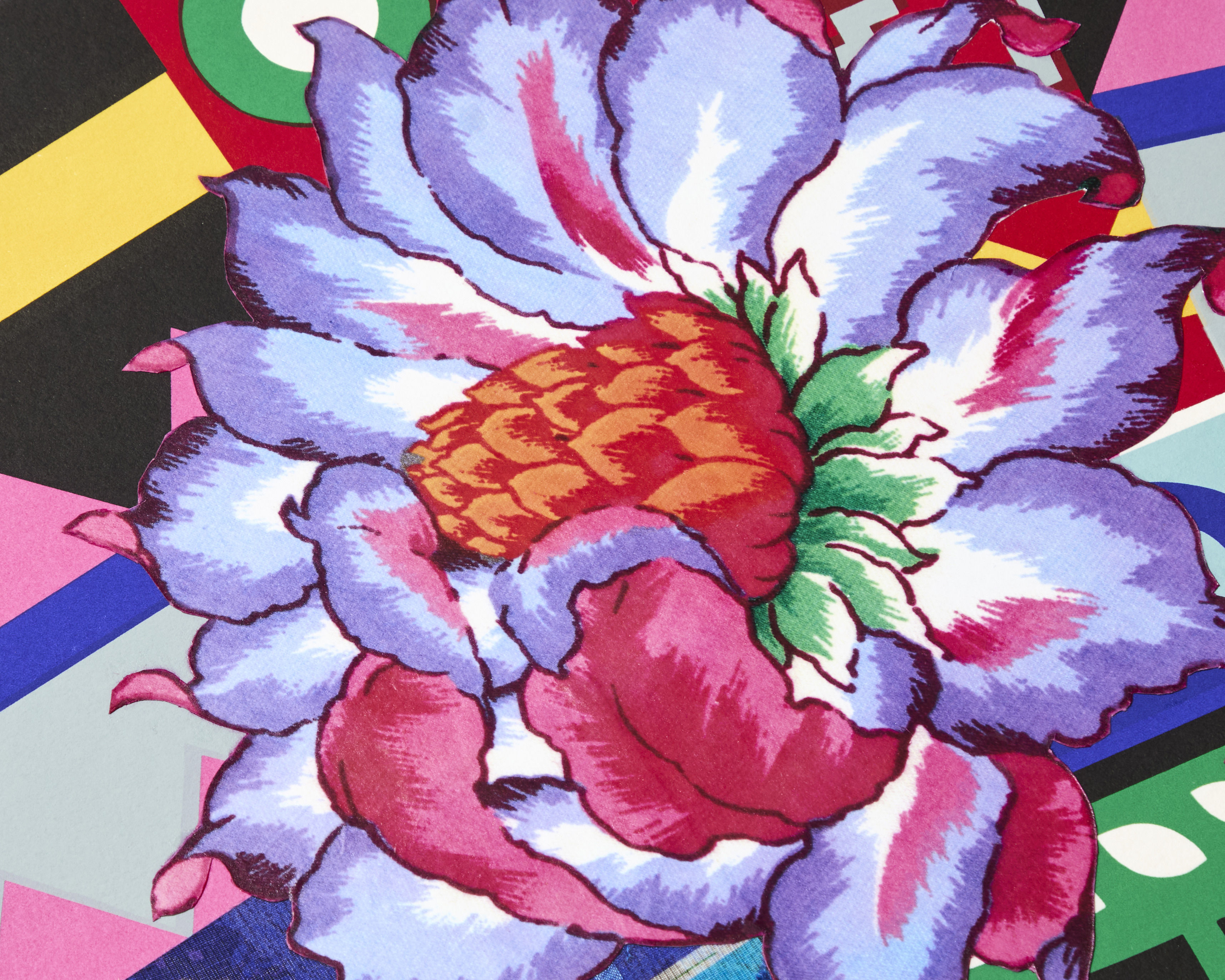
MIRIAM SCHAPIRO | (DETAIL) In the Heat of Winter, 1994. Screenprint, 33 x 62 in (83.8 x 157.5 cm)
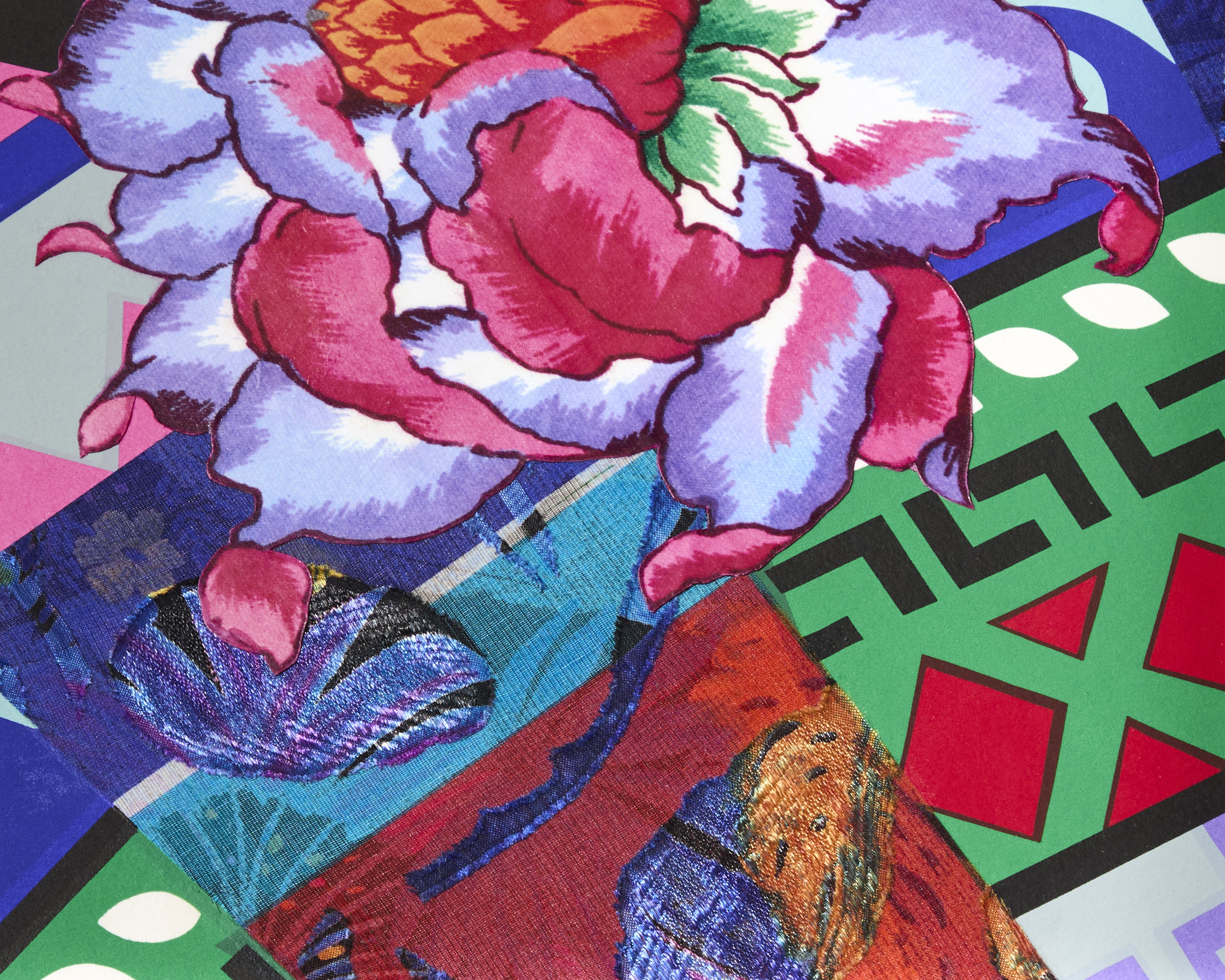
MIRIAM SCHAPIRO | (DETAIL) In the Heat of Winter, 1994. Screenprint, 33 x 62 in (83.8 x 157.5 cm)
Photos by Marylene Mey, courtesy of Zane Bennett Contemporary Art